

High Altitude Nutrition
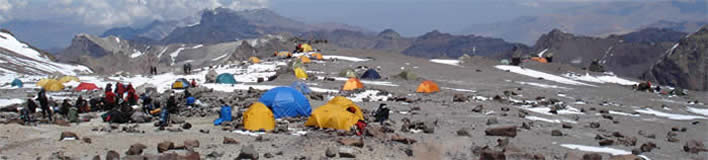
The meals on our Aconcagua mountain expeditions are carefully chosen by nutritional experts, calculating calories per day, carbohydrates required and accounting for a good level of taste and variety. We provide trekking food, base camp and high altitude food and we also cater for vegetarians or those with a specific food allergy. During an ascent such as Aconcagua you will burn an abnormally excessive amount of calories. Above 3500m in altitude, a climber burns about 8000 calories per day. Taking into account that the body is constantly creating energy reserves, the diet at this altitude must supply at least 2500 calories daily to be energetically prepared for the big challenge. However, conversely eating excessive amounts is detrimental since the body requires energy to aid good digestion; thus if you eat too much this can result in drowsiness and/or coldness at rest and heaviness when it is time to climb. We recommend that you drink a minimum 3 and preferably up to 5 litres of different liquids a day. Although powdered juice is not well accepted by the palate or stomach, it is practical and commonly used on expeditions; however, it is best to vary the drinks and flavours since this helps the body to accept them more readily. Concentrated natural juice, tea and soup are good examples of liquids that work well in the mountains.
The strength of a climber is derived from healthy nutrition and the recommended source of calories comes from sugars, lipids (of animal and vegetable origin) and proteins. Our food is easy to digest, tasty and varied and you should eat moderately, chewing the food well and eating slowly.
Carbohydrates provide your body with glucose which functions as your body's fuel, being extracted once the carbohydrates have been broken down. Glucose joins the bloodstream and provides your body with the energy it needs and can also be stored in your muscle tissues and in your liver. Glucose is vitally important as it maintains the body's endurance and if the body runs out, you will start feeling fatigue. Your muscles could not continue to perform at their optimal level. Since mountaineering consumes a lot of energy, it is advised to load your body with lots of carbohydrates.
It is highly recommended to start preparing your body's nutrition for your mountaineering expedition at least three days prior to the event. Your diet should compose of at least 70% carbohydrates. It doesn't necessarily mean you also have to increase your calorie content. Doing so would just make you gain weight! The best thing to do is to reduce your protein and fat intake, instead. However, higher carbohydrate content in your diet runs the risk of a decreased intake in other essential nutrients in the long run. Carb loading should only be done for the first few days; after which, you should get back to your regular diet. Since mountaineering involves travelling at higher elevations, your food intake may change at higher altitudes. In fact, studies have shown that mountaineers tend to be fussier above 3000m so nutritional value is not the only consideration at altitude. You may not feel like eating a nutritious meal at 4500m but it is important to continue to eat well so as to keep your body sustained!
Higher altitudes actually trigger anorexia and loss of appetite. Not only that, the body will go through an overall change in metabolism. Your body may not be able to digest some of the food you eat when you're at home. These are the reasons why mountaineering contributes to weight loss, on top of the fact that a climber should expect to burn more calories at elevated locations. With about 70% of your mountain diet made up of carbohydrates, the rest should be reserved for fat and protein. Fatty foods require much more oxygen to digest, thus, if you eat too much high-fat food, it could slow down your acclimatisation.
If you’ve ever climbed above 3000m, you may be familiar with the nausea, headache and general malaise associated with high altitude travel. Eating to match exertion levels is crucial in order to maintain lean muscle mass, keep sharp, and stay at a healthy body weight (or at least minimise loss so as not to be a problem when climbing). During the Himalayan Scientific and Mountaineering Expedition of 1960-1961, most subjects working at an altitude of 5834m lost between 1-3 pounds during the first week at altitude. Some males can lose up to 6.6 pounds of bodyweight. If enough of that is insulating body fat, subjects may actually experience decreased tolerance to cold environments and be more susceptible to illness.
Hydration
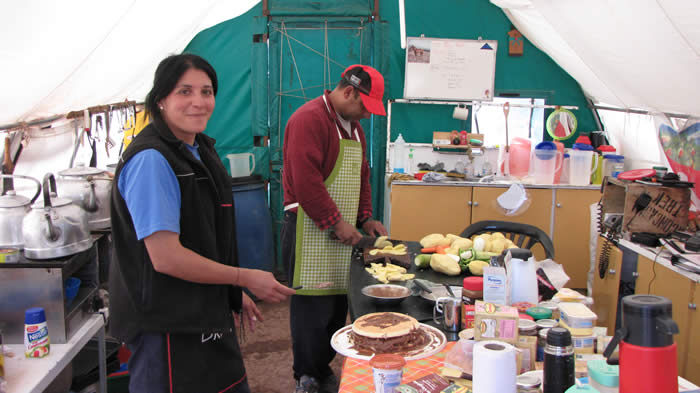
The key to success at altitude is to hydrate regularly. Dehydration exacerbates symptoms of altitude sickness and diminishes appetite further, so if you feel the start of a headache, try warding it off with a carb-loaded drink (aim for 3-4 litres a day, containing 100-250g carbs in addition to your food calories. The other key is to eat plenty of food (or suck on boiled sweets), as much as your body will tolerate. In fact, you’ll notice in the recommendations below that juice mixes, cocoa, tea, lemonade, isotonic drinks and soups all involve plenty of water and carbs; the more per meal, the better.
Macro-Nutrient Ratio and Calories
What about the mixture of carbs to protein and fat? Carbohydrates are certainly important for any endurance activities such as marathons, triathlons, and backpacking. Do they behave the same at altitude, and in the cold? According to research, most mountain climbers prefer the taste of a high-carbohydrate, low-fat diet at altitude, and many find fatty foods to be unpleasant or distasteful. Carbs are helpful in replacing depleted muscle glycogen stores, preventing protein from being burned as energy, and they require less oxygen for metabolism. Accordingingly, “Fat, while tolerated relatively well in the cold at sea level, may not be as well tolerated in diets at high altitude… Although high-fat foods are energy dense and reduce the weight/calorie aspect of food carried on climbs, fat requires more oxygen for metabolism than carbohydrate and will place a small, but added burden upon the already overtaxed oxygen economy of the climber.” Climbers who reach for high fat foods usually are not going to be consuming as many carbs, which can result in low blood sugar that, in turn, can lead to confusion, lack of simple coordination, and disorientation.
Some people end up craving fats and dig into peanut butter (that hasn’t frozen!) or add butter to whatever they can. In terms of the best recommendations for ongoing treks and sustained energy, Carolyn Gunn, the author of the Expedition Cookbook suggests planning for 4000 calories per person per day for a trip such as Aconcagua, in the ratio of 65% carbs, 20% fat and 15% protein (what amounts to about 2 pounds of food per person, per day). Expenditure can be as high as 6000 calories/day, depending on altitude, extreme temperatures, and performance requirements for any given day. The raw energy requirements increase 15-50% over that needed at sea-level for comparable exertion, and will obviously depend on the size and gender of the individual; a 115 pound woman, for example, won’t need as much food as a 175 pound man, assuming they’re doing comparable work. At the same time, food intakes typically fall 10-50% during altitude exposure, depending on the rapidity of ascent and the individual’s susceptibility to altitude sickness.
Gender
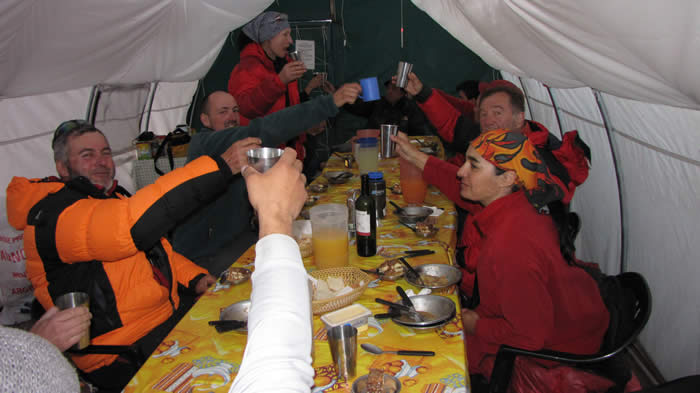
Interestingly enough, one summary reported: “Women may have a biological advantage at altitude. In general, they suffer less severe symptoms of AMS and do not experience as great a depression in appetite and food intake as do their male counterparts”. Women may be challenged by other issues at altitude (such as toting comparable loads at a lower bodyweight) but being at altitude per se doesn’t seem to be one of them!
What Works for You…
Chicken noodle soups, hot cocoa and carbohydrate-containing drinks definitely “feel” better in the mouth and go down much more easily than jerky, nuts, or the tastiest candy bars, which simply take too much energy to chew, swallow, absorb into the bloodstream, and then digest. The more quickly a carbohydrate is absorbed into the bloodstream (i.e. in the form of fluids) the faster it can be used as energy. Each individual needs to find out what works best for his or her body and stick with it.
Recommendations
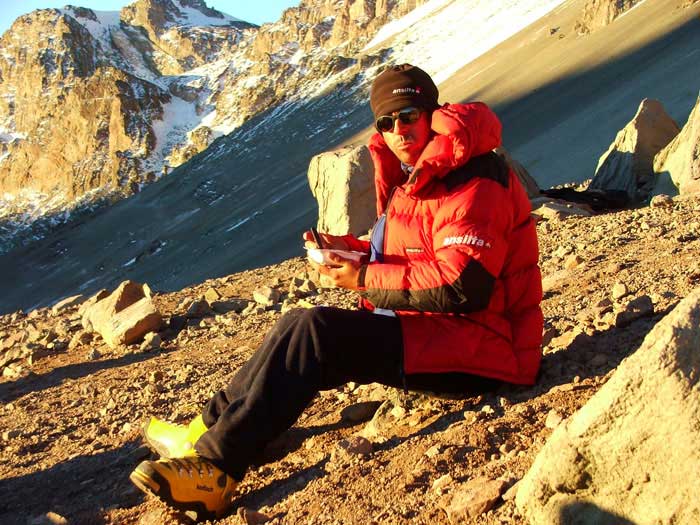
To determine what might work best for you, test out a variety of foods at elevations above 3000m and scrap what doesn’t appeal at this height, as it probably won’t get any more palatable higher up. Take the tastiest foods you can find, and plenty of different options, as you’ll likely only get increasingly fussy higher up. Try to ward off monotony; I can’t imagine anything worse than having the same food 4-5 days in a row if you didn’t like it the first time you tried it. Try cooking or preparing the food as you will have to do in the field, and test out no-cook food when it’s frozen to see if it’s still edible. Some recommendations include:
- Breakfasts: granola or energy bars, pop tarts, oatmeal, bagels, hot sweet rice, couscous, grapenuts, hot cocoa and tea
- Lunches: crackers (wheat thins, Ritz), cookies, bagels or rolls, sausages, cheese sticks, nuts, candy bars, dried fruits, flavoured juice drink mixes, fig bars, boiled sweets, trail mix
- Dinners: cocoa, soups and teas as the first course; freeze dried meals with rice, noodles, vegetables; instant rice, stuffing, or mashed potatoes; pudding or mousse for desserts
Final Digestive Issues
So what do you tell someone who tells you to eat string cheese to plug you up? Constipation is actually quite a common complaint at altitude, where decreased oxygen slows down the function of the intestines and excessive fluid losses rob water from the colon. The opposite can also occur due to food preparation with less than adequate hygiene and diarrhoea is quite common among climbers in third world countries.
However, there are several ways to prevent suffering from diarrhoea such as:-
1) Clean hands thoroughly before eating
2) Do not eat any exterior surfaces of tomatoes or fruit
3) Avoid any vegetables that haven’t been boiled
4) After day 2 of a trek, avoid eating meat of any kind that has not been freshly killed or refrigerated, unless it’s been dried and preserved (such as jerky sticks)
Finally, if you suffer from intestinal wind, limit the amount of dehydrated food high in carbohydrates that you eat, as they tend to cause gas production. Enjoy your expedition and healthy eating up high!